[ Concrete ]
Concrete Work in Philadelphia.
Foundations, basement slabs, sidewalks, pads, and driveways — specified for Pennsylvania winters and placed by people who know that everything above the concrete depends on it.
Licensed & Insured · 5.0★ Client Rating
[ Recent Work ]
Concrete That Performs.
-
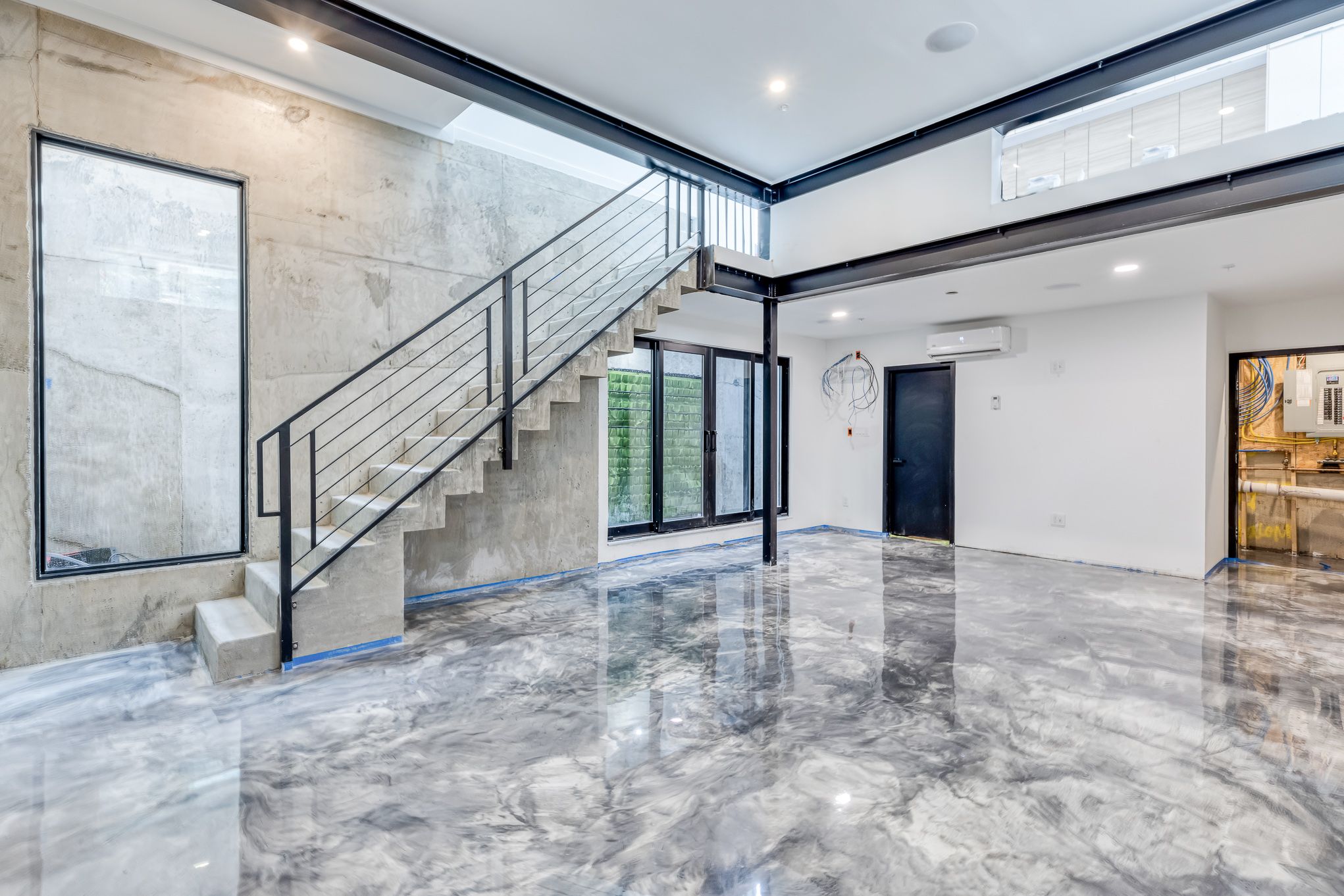
Luxury Custom Townhome
Full build where the concrete is the finish — polished floors through a double-height space.
View this project -
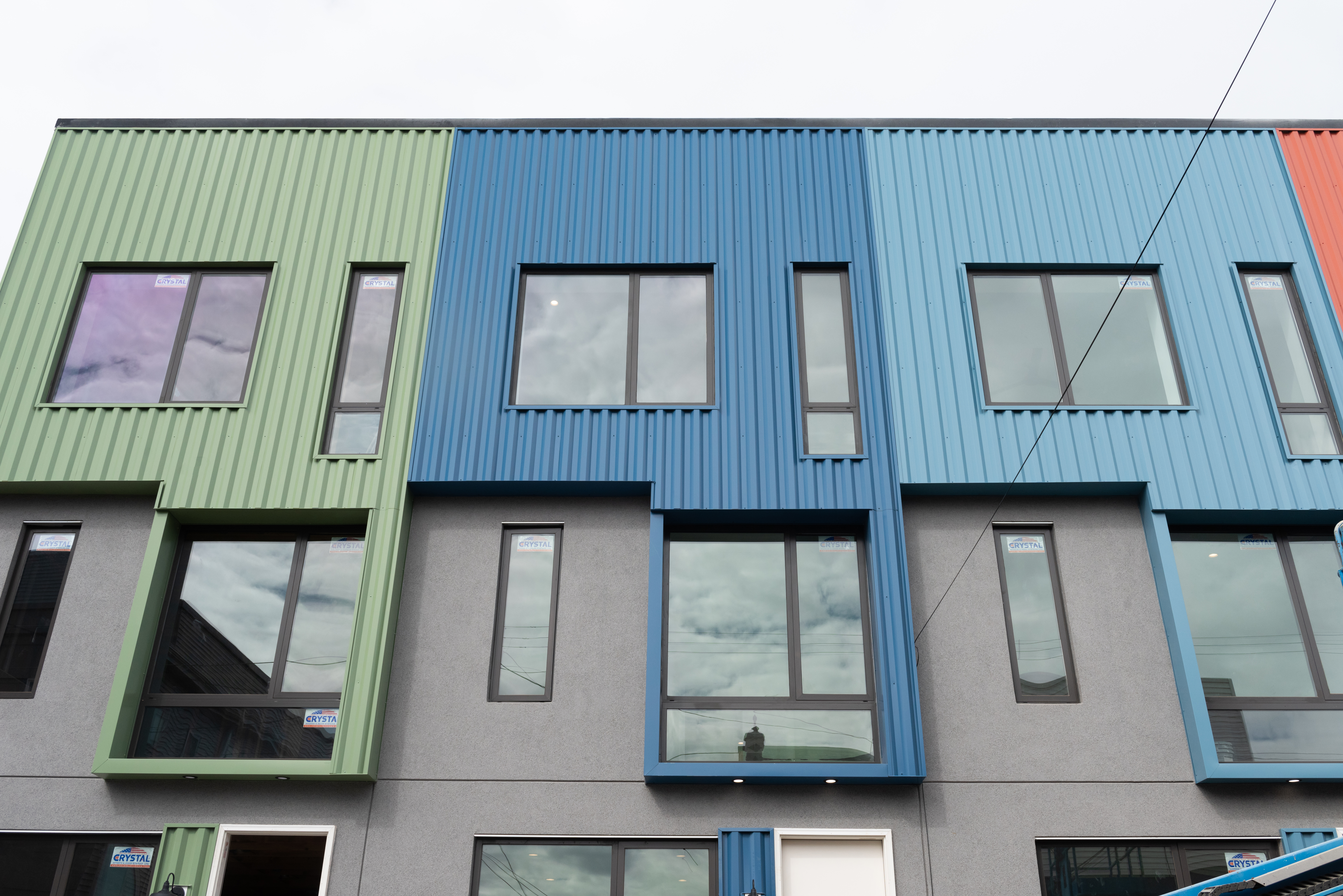
Five New Construction Homes
Five new homes, five new foundations — footings to finished floors by our crew.
View this project -
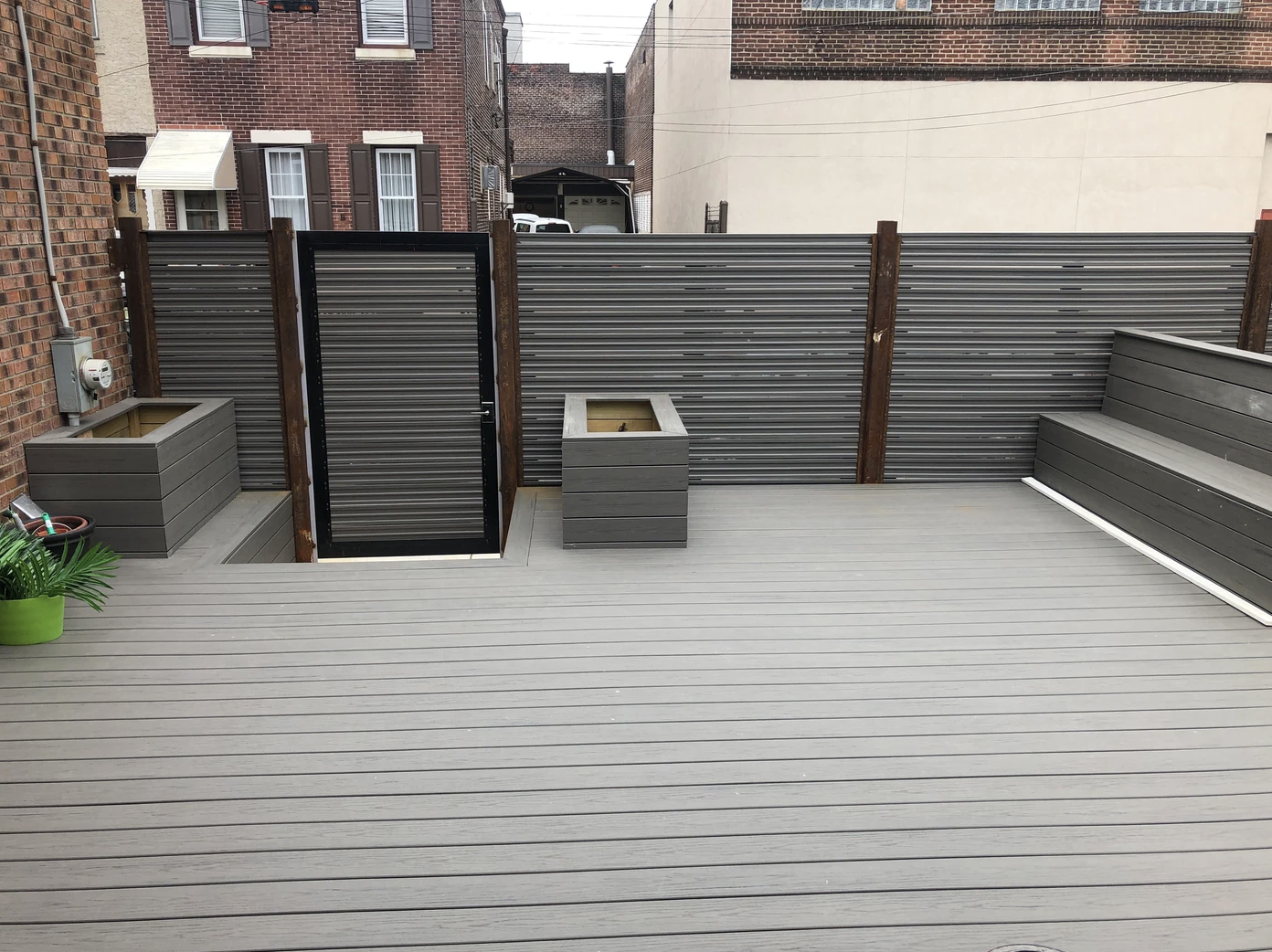
Home Addition & Rehab
Property rehab with rear patio and exterior concrete built to outlast the winters.
View this project
[ What’s Included ]
Structural to Sidewalk.
Footings and foundations for new builds, flatwork to Philadelphia city spec, and interior floors where the slab is the finish. Every job includes demolition and haul-away of the old material, a properly compacted base, reinforcement sized to the use, and permits where the work needs them.
- Footings & foundation walls
Structural concrete for new builds and additions, poured below frost depth.
- Basement slabs & underpinning
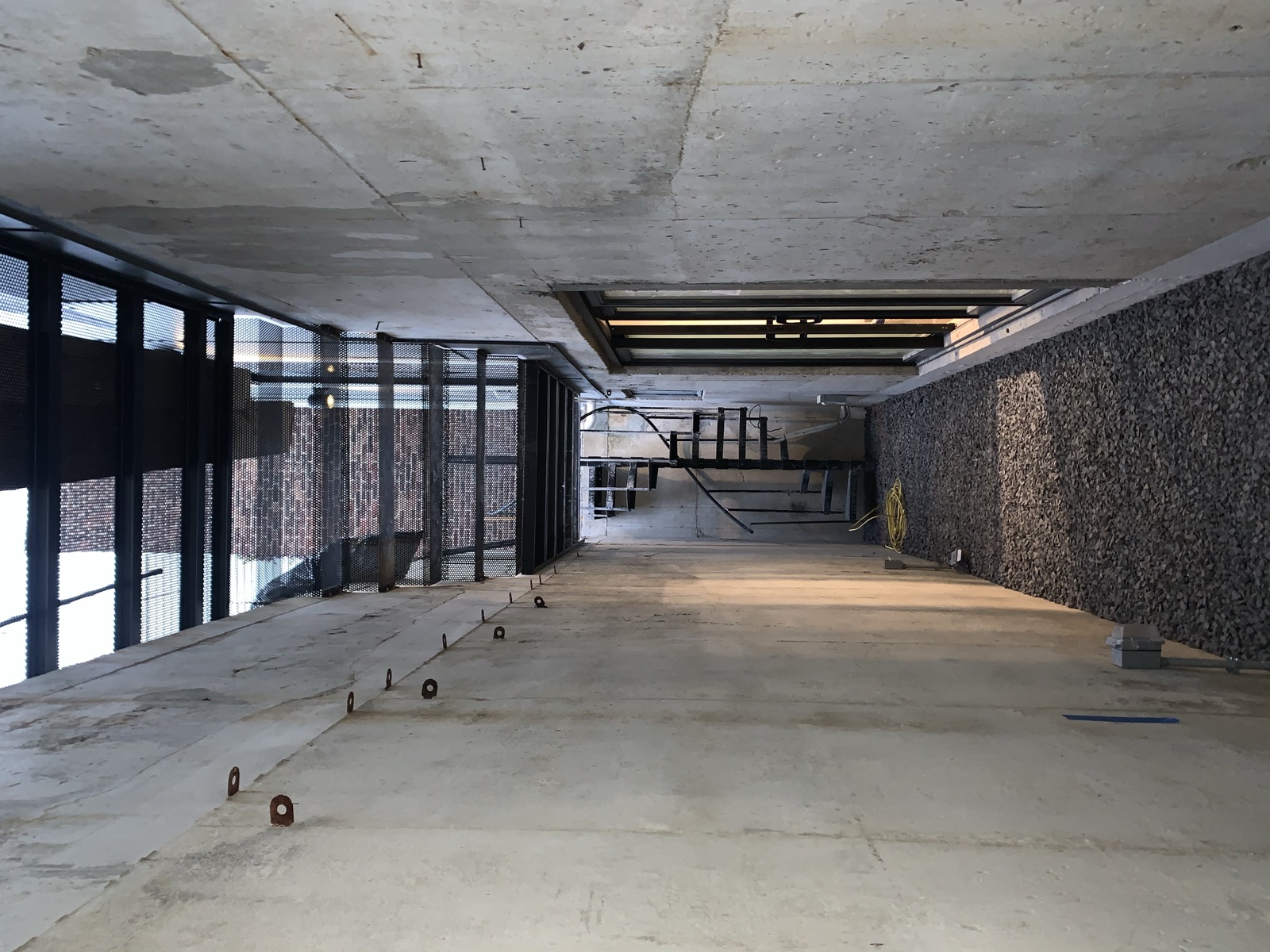
Excavation, vapor barrier, reinforced slabs, and structural support work.
- Sidewalks to city spec
Philadelphia-spec replacement with the permit and pedestrian protection handled.
- Driveways, patios & pads
Air-entrained exterior pours with planned control joints and honest finishes.
- Steps & curbs
Formed, poured, and finished to take road salt and Pennsylvania winters.
- Polished interior floors
Slab-as-finish floors, like the polished concrete through our Waterloo Street build.
[ Built for Winter ]
Why Concrete Fails Here — and What We Do Differently.
Around here, concrete has one real enemy: freeze-thaw. Water gets into the surface or under the slab, freezes, expands about nine percent, and pries the work apart a little more every winter. Everything we do differently traces back to that fact:
- 01
Air-entrained mix on all exterior work
Microscopic air bubbles give freezing water room to expand without breaking the surface. Skipping it saves a few dollars a yard and costs you the driveway.
- 02
Base depth is non-negotiable
A slab is only as good as what it sits on. We excavate to proper depth and compact stone in lifts — most heaved Philly sidewalks failed underneath first, not on top.
- 03
Footings below frost depth
Structural footings go below the local frost line so the ground that freezes can’t lift what we built.
- 04
Control joints, planned — not improvised
Concrete will crack as it cures; the skill is deciding where. Joint layout is in the proposal, not sawed wherever the crew felt like it.
- 05
No water added at the truck
Wet mix finishes easier and cures weaker. On hot days the answer is planning the pour, not thinning the concrete.
[ Straight Answers ]
Repair or Replace? We’ll Tell You Straight.
Patching over a failed base is renting a repair, not buying one — and we’ll say so.
Not every cracked sidewalk needs full replacement — a lifted slab with a sound base can sometimes be cut and re-poured alone, and a hairline shrinkage crack in a garage slab is cosmetic, not structural. The estimate names which slabs stay, which go, and why — so you’re comparing real scopes, not just totals.
Slabs vs. footings, in one paragraph: a slab spreads load across the ground — right for floors, sidewalks, and pads. A footing concentrates load and carries structure down below frost depth to soil that can bear it. When someone quotes you a “slab” for an addition that needs footings, that’s not a cheaper option; it’s a different, wrong answer. It’s also why hiring a builder who does both framing and concrete pays off — the structure and what it stands on get designed together.
[ Our Process ]
Specified, Poured, Protected.
Free Estimate
We measure the area and check what’s under and around it — soil, drainage, tree roots, utilities — then give you an itemized number including demo and haul-away.
Design & Proposal
Thickness, mix, reinforcement, base depth, joint layout, and finish are specified in writing, with permits where needed. You know exactly what you’re buying.
The Build
Demo and excavation, compacted stone base, forms and reinforcement, then the pour — placed, finished, jointed, and cured properly.
Walkthrough & Warranty
We walk the finished work together, explain the curing and sealing timeline, and warranty the work in writing.
[ Pricing ]
What Does Concrete Work Cost?
Real concrete quotes specify mix, base, and reinforcement — not just a number on a napkin. Here’s how the common scopes break down.
| Scope | What it covers | Typical range |
|---|---|---|
| Sidewalk replacement | Demo, base, city-spec pour, permit | $12–$18 / sq ft |
| Basement slab | Excavation, stone, vapor barrier, reinforced slab | $8–$15 / sq ft |
| Driveway / patio / pad | Demo, base, air-entrained pour, joints, finish | $8–$15 / sq ft |
| Foundations & footings | Excavation, forms, engineered pour, inspection | Priced per project |
Our pricing promise: written, itemized estimates; a capped deposit; and no surprise change orders — if excavation turns up something the site visit couldn’t see, you see it, we price it, and you approve it before work continues.
[ Questions ]
Concrete Answers.
Am I responsible for the sidewalk in front of my Philadelphia house?
Yes — in Philadelphia, sidewalk repair is the property owner's responsibility, and the city can cite you for broken or heaved slabs. We replace sidewalks to city spec, handle the permit and any required inspection, and manage pedestrian protection while the work is open.
Why does new concrete crack, and how do you prevent it?
Concrete shrinks as it cures — cracking somewhere is physics. The professional's job is deciding where: properly spaced control joints give the slab clean places to crack invisibly. The cracks you should never accept come from bad base prep, missing reinforcement, or water added to the mix on a hot day to make finishing easier. We control all three.
How long before I can walk or drive on new concrete?
Foot traffic after 24 to 48 hours, vehicles after 7 days, full design strength at 28 days. We schedule pours so the curing time doesn't collide with your life — and we won't let a driveway get parked on early just because the surface looks hard.
Can you pour a basement slab in an old rowhome?
Yes — it's one of our specialties. Many rowhome basements have thin, cracked, or dirt floors. We excavate as needed, address drainage with stone and a vapor barrier, and pour a proper reinforced slab. If you want more headroom, that conversation involves underpinning the party walls — engineered, permitted work we price honestly because done wrong it endangers two houses.
What is air-entrained concrete and do I need it?
It's concrete mixed with microscopic air bubbles that give freezing water somewhere to expand. For any exterior concrete in Pennsylvania — sidewalks, driveways, steps, pads — yes, you need it. Interior slabs don't. It's a small line on the mix ticket that decides whether your surface scales apart after a few winters of freeze-thaw and salt.
[ Where We Work ]
Where We Do This Work.
Sidewalk and flatwork calls come from every neighborhood we serve, but our structural concrete is busiest where we build — foundations for infill construction in East Kensington and Port Richmond, and basement slabs under gut renovations in Fishtown. Concrete rarely travels alone: it's usually the first phase of a full build or the ground truth under a framing package, and our general contracting page explains how we sequence all of it under one schedule.
Need Concrete Done Right?
Free estimates. Real specifications in writing. A builder who picks up the phone.
Ask about financing options when you call.